Tips & Tricks
Travelling to Namibia: What to Arrange Before You Go
By the Herd Team, Windhoek
Written from the road. Herd is Namibian owned and operated, running guided 4x4 convoys out of Windhoek, with vehicles supplied by the family hire business our people have run in this country since 2003. Everything below comes from driving these routes ourselves.

Namibia asks very little of its visitors once they arrive. The country is calm, the roads are quiet, and the formalities at the border are brief.
What it does ask, it asks in advance. A passport with too few pages, a driving licence a police officer cannot read, or a visa left until the last week can turn the beginning of a long-planned journey into an administrative problem. None of it is difficult. All of it is easier done at home than at a counter in Windhoek.
Here is what to arrange, and roughly when.
Your passport
Namibia requires a passport valid for at least six months beyond the date you intend to leave the country. A national identity card will not do.
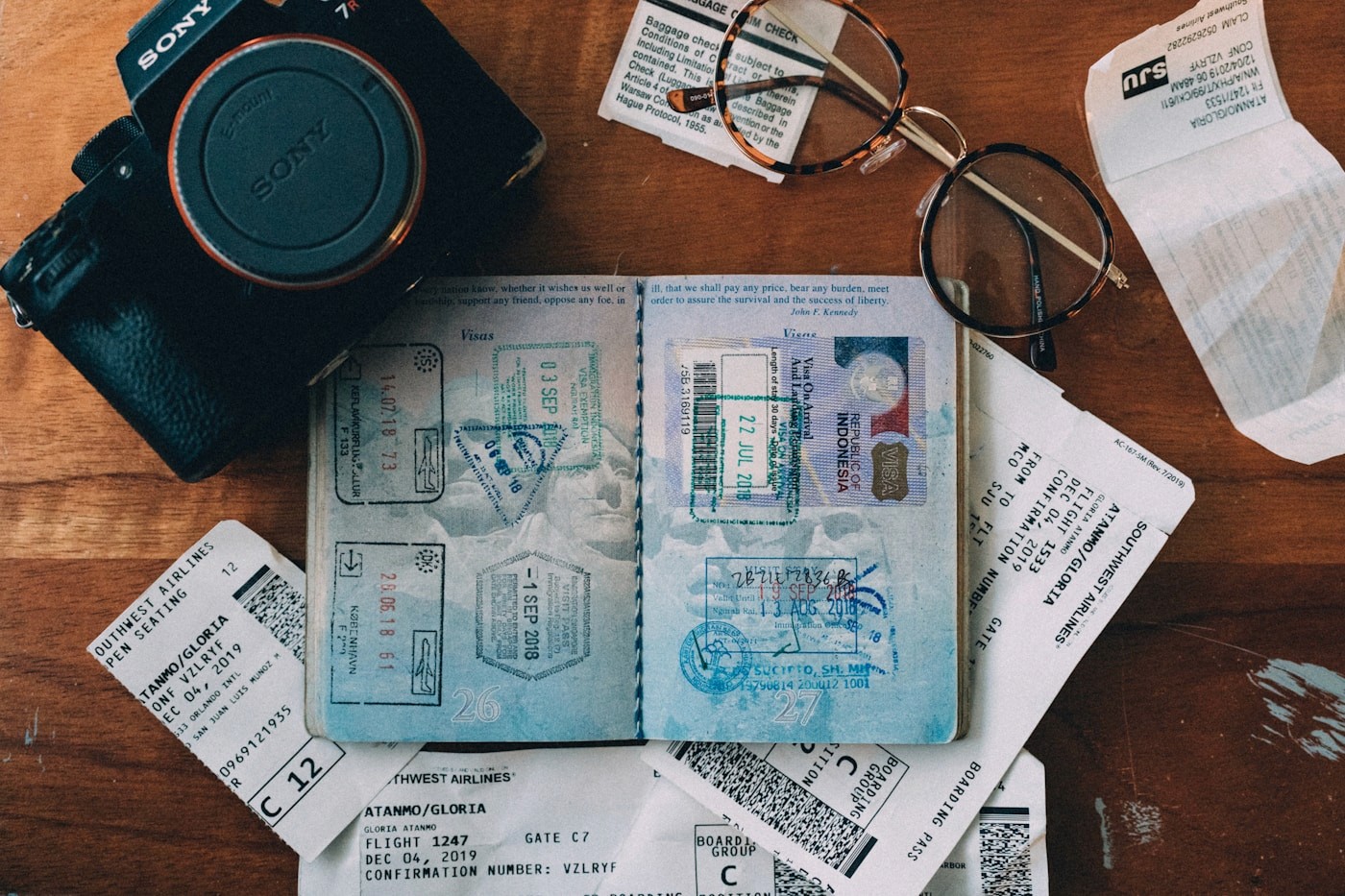
The requirement that catches people out is blank pages. Immigration needs space for the visa and for entry and exit stamps, and travellers arriving with a nearly full passport have been turned back. Check for at least three completely blank pages before you book anything else.
If your passport is close to either limit, apply for a new one early. Renewal times vary considerably by country and by season, and this is the single item on the list with the least flexibility.
The visa, and how it actually works
Namibia introduced a visa requirement for most non-exempt nationalities in April 2025. Citizens of a number of countries, including South Africa, Botswana, Zambia, Zimbabwe, Kenya, Malaysia, Singapore, Brazil and Russia among others, remain exempt. Everyone else needs a visa to enter.
There are two routes, and they end in the same place.
Apply online before you travel. Namibia’s Ministry of Home Affairs operates an online portal for what is described as a visa on arrival. The term is slightly misleading. The online system is a pre-approval: you submit your details in advance, receive an electronic approval notice, and the visa itself is still issued and stamped when you land. Print the approval and carry the hard copy. Officers ask for it.
Apply at the port of entry. Visas are also issued on arrival at Hosea Kutako International Airport outside Windhoek, at Walvis Bay, and at the major land border crossings. The process is straightforward. It takes longer, and it depends on the queue.
The fee is set in Namibian dollars. At the time of writing it is N$1,600 for travellers from non-African countries and N$1,200 for African nationals, which converts to roughly eighty to ninety euros.
Tourist entry is generally granted for thirty days, extendable to ninety at the discretion of the immigration officer or through the Ministry in Windhoek.
Visa policy in this region changes. Check the official government portal for current requirements close to your departure rather than relying on any secondhand account, including this one.
We do not apply for visas on behalf of guests. The process is short, the portal is straightforward, and the application has to come from the traveller. What we will do is tell you what you need and answer questions along the way.
Your driving licence
If you intend to drive on a Herd convoy, you need a licence that Namibian authorities can read. Driving is optional, so guests who do not plan to take the wheel do not need one for the trip.
A licence issued in English is accepted. If yours is in another language, carry either an International Driving Permit, which is a standardised translation recognised across most of the world and issued by motoring authorities in your home country, or a certified translation of your national licence.
The reason is practical rather than legal. Roadside checks are routine on Namibian highways, and an officer who cannot read a licence has no way to verify it. An English version removes the ambiguity and the delay that follows it.
To drive on a Herd convoy you must be at least twenty years old and have held your licence for at least two years. Each shared 4x4 is automatic, and not everyone in the truck needs to drive. Guests who would rather not take the wheel are welcome to leave it to the others.
Health and vaccinations
No vaccinations are mandatory for entry to Namibia for most travellers.
Several are commonly recommended, and a travel clinic will usually raise hepatitis A, tetanus and polio. Whether you need them depends on your history and your own doctor’s judgement rather than on any Namibian requirement.
One exception applies. Travellers arriving from, or transiting through, a country where yellow fever is present may be asked for proof of vaccination. If your route into Namibia passes through central or west Africa, or through certain hubs in east Africa, confirm the current rule with your airline or a travel clinic before you fly.
Malaria
The northern reaches of Namibia carry a seasonal malaria risk, concentrated in the wetter months and in the far north and northeast. Most of the country, including the desert and the coast, is low risk or none.
Many travellers on routes like this one take no prophylaxis and rely on the ordinary precautions instead: covering arms and legs after sunset, using a repellent containing DEET, and keeping the mosquito net on the tent closed through the night. Others prefer medication. It requires a prescription, and the decision belongs between you and a doctor who knows your history.
Insurance
Travel insurance is not a condition of joining a Herd convoy, and Namibia does not require it for entry. We recommend it anyway, and we recommend it more strongly than most operators would.
The reason is distance. Namibia has a great deal of remote country, and this route spends most of its days in it. The gap between a campsite in Damaraland and a hospital is measured in hours, not minutes. A policy that covers emergency medical treatment and evacuation is the difference between an inconvenience and a serious problem, and it costs very little relative to the trip.
Cancellation cover is a separate question and a personal one. Flights to Windhoek are long and expensive, and plans change for reasons nobody anticipates.
A checklist, in order of urgency
Working backwards from departure:
Three to six months out. Passport checked for validity and blank pages, renewed if either is marginal. Travel insurance arranged.
One to three months out. Visa applied for online, if you are applying in advance. Travel clinic appointment for any recommended vaccinations, some of which are given in courses rather than single doses.
One month out. International Driving Permit or certified licence translation obtained. Visa approval notice printed. Confirm your entry route against current yellow fever rules if you are transiting Africa.
The week before. Passport, visa approval, licence and translation, insurance documents and return flight details gathered in one place. Copies stored somewhere separate from the originals.
None of this takes long. It simply cannot be done from the airport.
What to bring, rather than what to arrange, is covered in our packing list. Details of what is included on a Herd convoy are in the FAQ.
Common Questions
Do I need a visa for Namibia?
Most non-exempt nationalities have required a visa since April 2025. Citizens of a number of countries including South Africa, Botswana, Zambia, Zimbabwe, Kenya, Malaysia, Singapore, Brazil and Russia remain exempt. Apply through the official government portal before you travel, or at the port of entry.
How much does a Namibian visa cost?
At the time of writing, N$1,600 for travellers from non-African countries and N$1,200 for African nationals, which converts to roughly eighty to ninety euros. Check the official portal for current fees.
How long does my passport need to be valid for Namibia?
At least six months beyond your intended departure date, with a minimum of three completely blank pages for the visa and entry and exit stamps.
Do I need an international driving licence in Namibia?
If your licence is issued in English, no. If it is in another language, carry either an International Driving Permit or a certified English translation, because roadside checks are routine and officers need to be able to read it.
Are vaccinations required for Namibia?
None are mandatory for most travellers. Hepatitis A, tetanus and polio are commonly recommended. Proof of yellow fever vaccination may be requested if you arrive from or transit through a country where yellow fever is present.
This Might Also Interest You


MEET THE TEAM

Sophie

Jonah

Maya
© 2026 Herd Namibia · Windhoek, Namibia.
