Tips & Tricks
Best Time to Visit Namibia: A Season-by-Season Guide
By the Herd Team, Windhoek
Written from the road. Herd is Namibian owned and operated, running guided 4x4 convoys out of Windhoek, with vehicles supplied by the family hire business our people have run in this country since 2003. Everything below comes from driving these routes ourselves.

The best time to visit Namibia depends less on the calendar than on what you have come to see. This is a country of two seasons, and they do not simply differ in temperature. They produce two different landscapes, two different rhythms of wildlife, and two entirely different qualities of light.
Neither is better. They are unalike, and the choice belongs to the traveller.
A country of two seasons
Namibia receives almost all of its rain between November and April. For the remaining six months, the interior is dry in a way that reshapes everything living in it.
That single fact explains most of what you will read below. Water governs where animals gather, how far you can see across a plain, what colour the country is, and how the roads behave underfoot. Understanding the water is understanding the season.
The dry months: May to October
As the rains recede, the seasonal pans across the interior begin to empty. Grasses brown and thin. Trees drop their leaves. By the middle of the dry season, the vegetation that concealed the country in March has largely gone, and the land opens up.
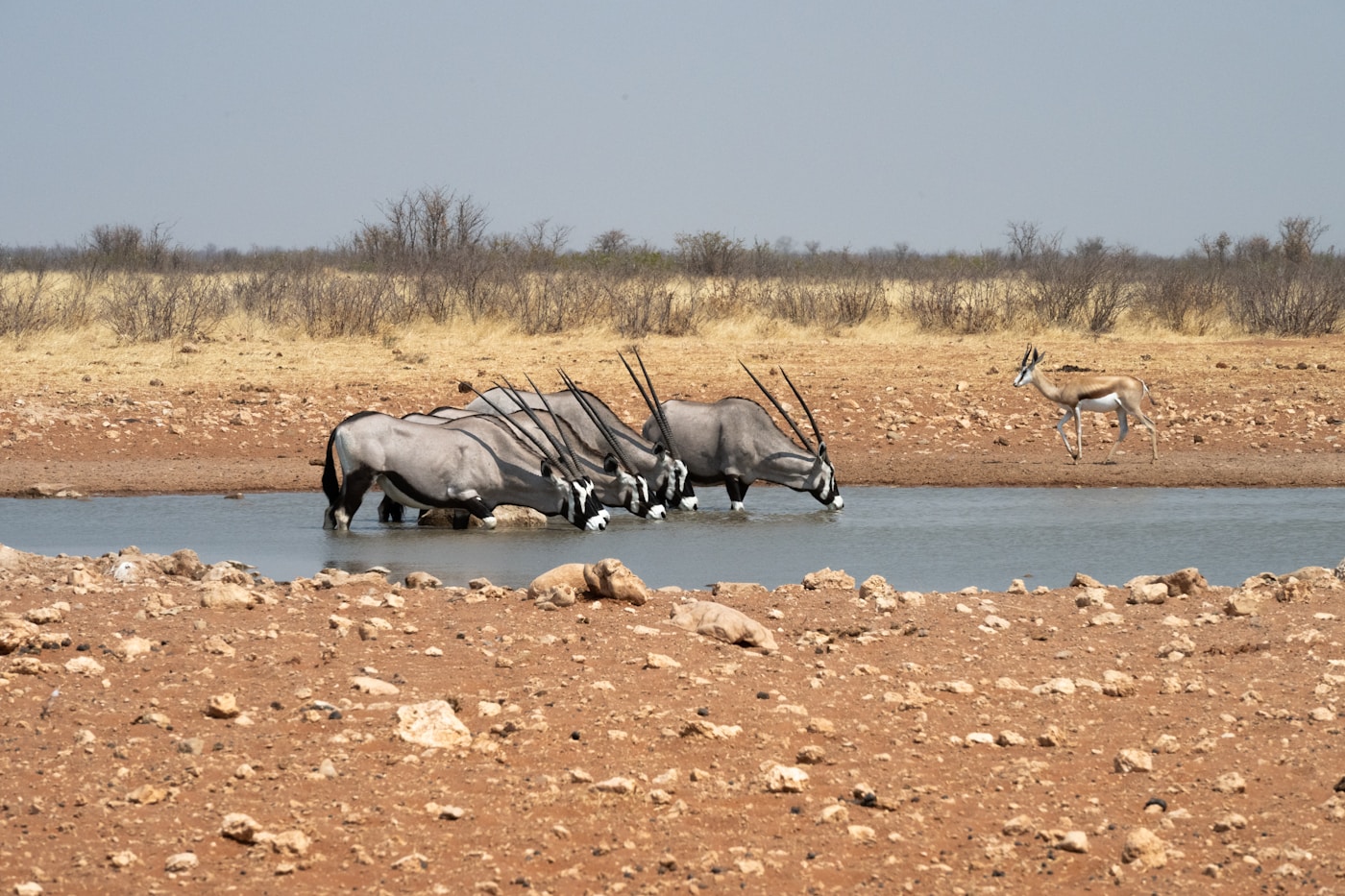
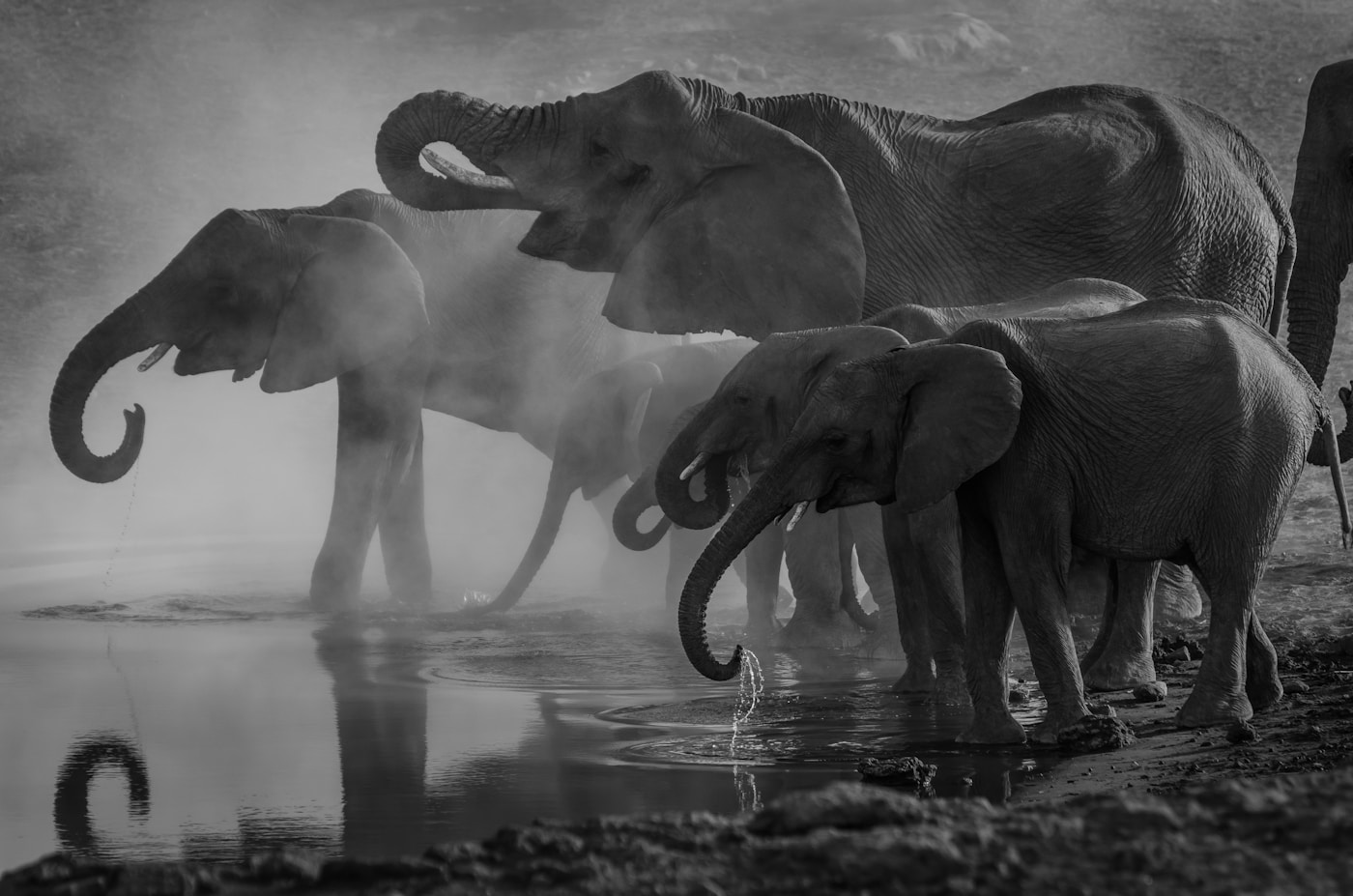
Wildlife responds to this with a logic that has held for millennia. With surface water disappearing across the wider landscape, animals move toward the permanent waterholes and stay near them. In Etosha National Park, this concentration becomes remarkable. Elephant, oryx, springbok, zebra, giraffe and the predators that follow them all converge on the same small number of pools, often within sight of one another.
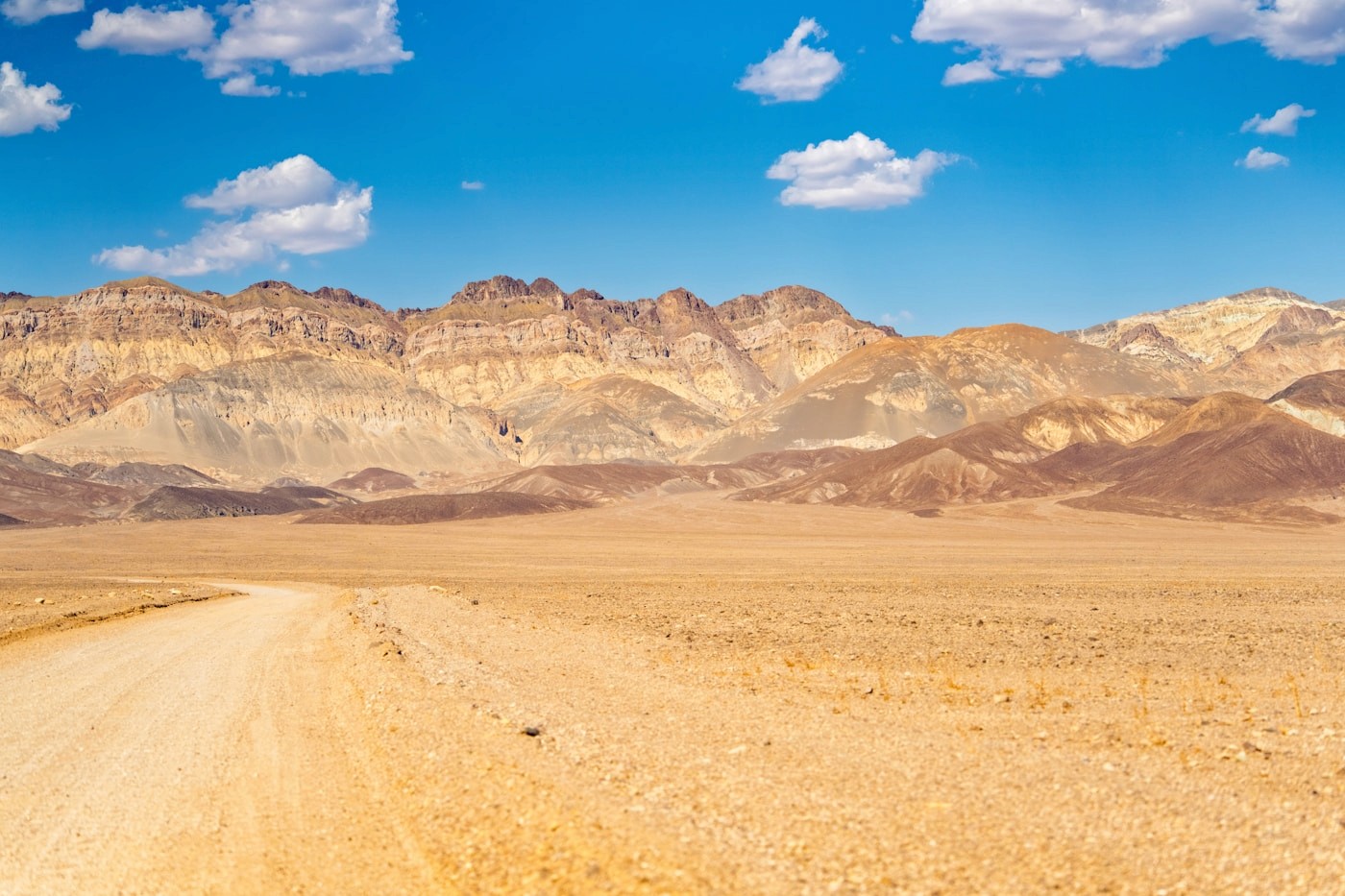
The clarity of these months extends beyond wildlife. Sightlines run for kilometres across open plains. The gravel roads that make up most of Namibia’s network are at their firmest and most predictable. The air holds almost no moisture, which gives the light a hardness that photographers travel a long way for.
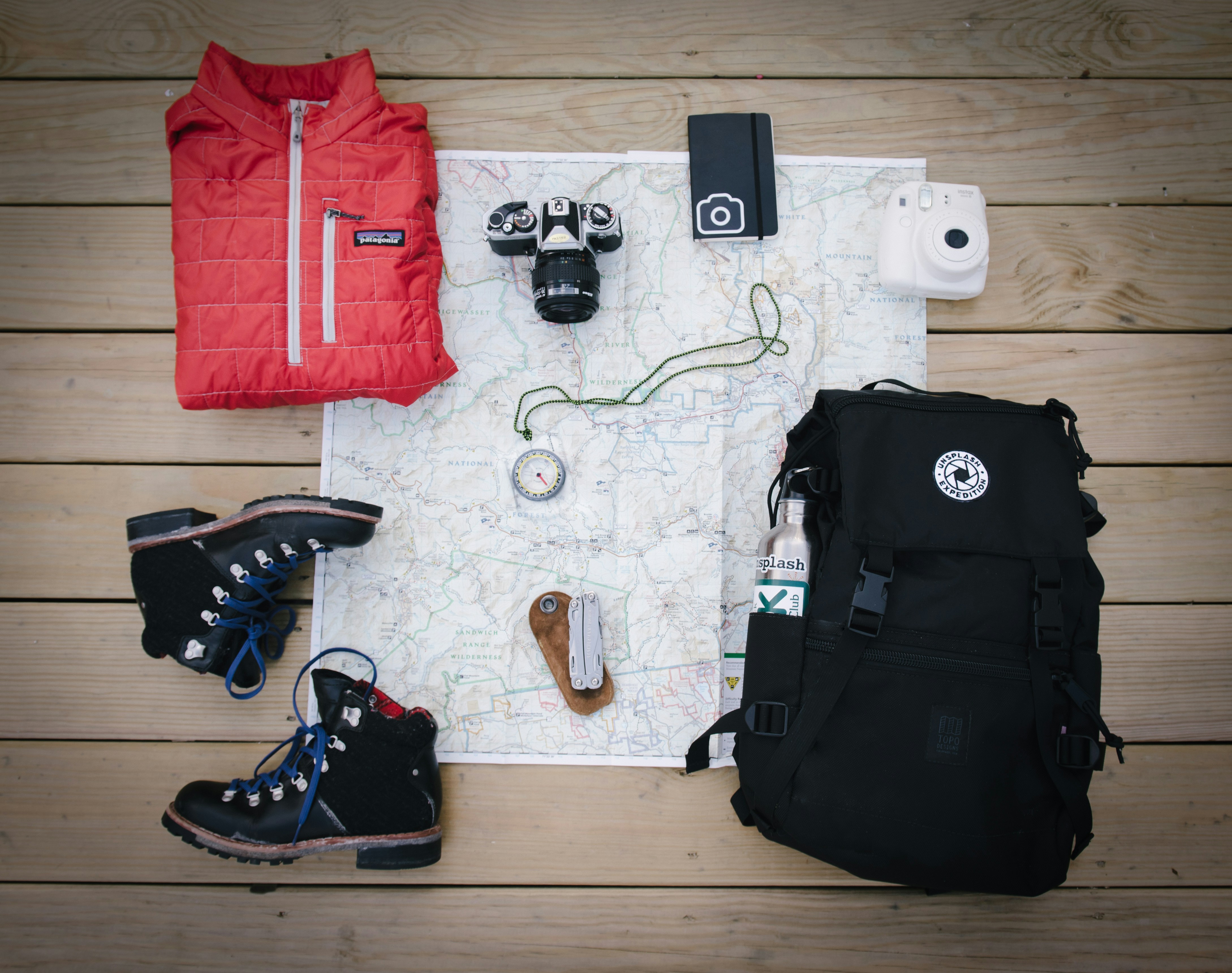
Winter nights, from June through August, are genuinely cold. In the desert around Sesriem and Sossusvlei, temperatures fall toward freezing after dark while the same day may have reached the mid-twenties. This is the nature of a landscape with no cloud cover and no humidity to hold the day’s heat. It is worth preparing for properly, and our packing list sets out what that means in practice.
By September and October, the dryness reaches its fullest expression. Game viewing is at its most concentrated of the year, and the desert light in the hour after sunrise is the light in which most of the photographs you have seen of this country were taken.
The green months: November to April
Then the rains arrive, and Namibia becomes a country most visitors never see.
The transformation is fast. Within weeks of the first serious storms, plains that were bare turn green, ephemeral rivers run for a few days at a time, and the Namib produces wildflowers in places that appear to support nothing at all. The camelthorn and mopane come back into leaf. The whole landscape softens.
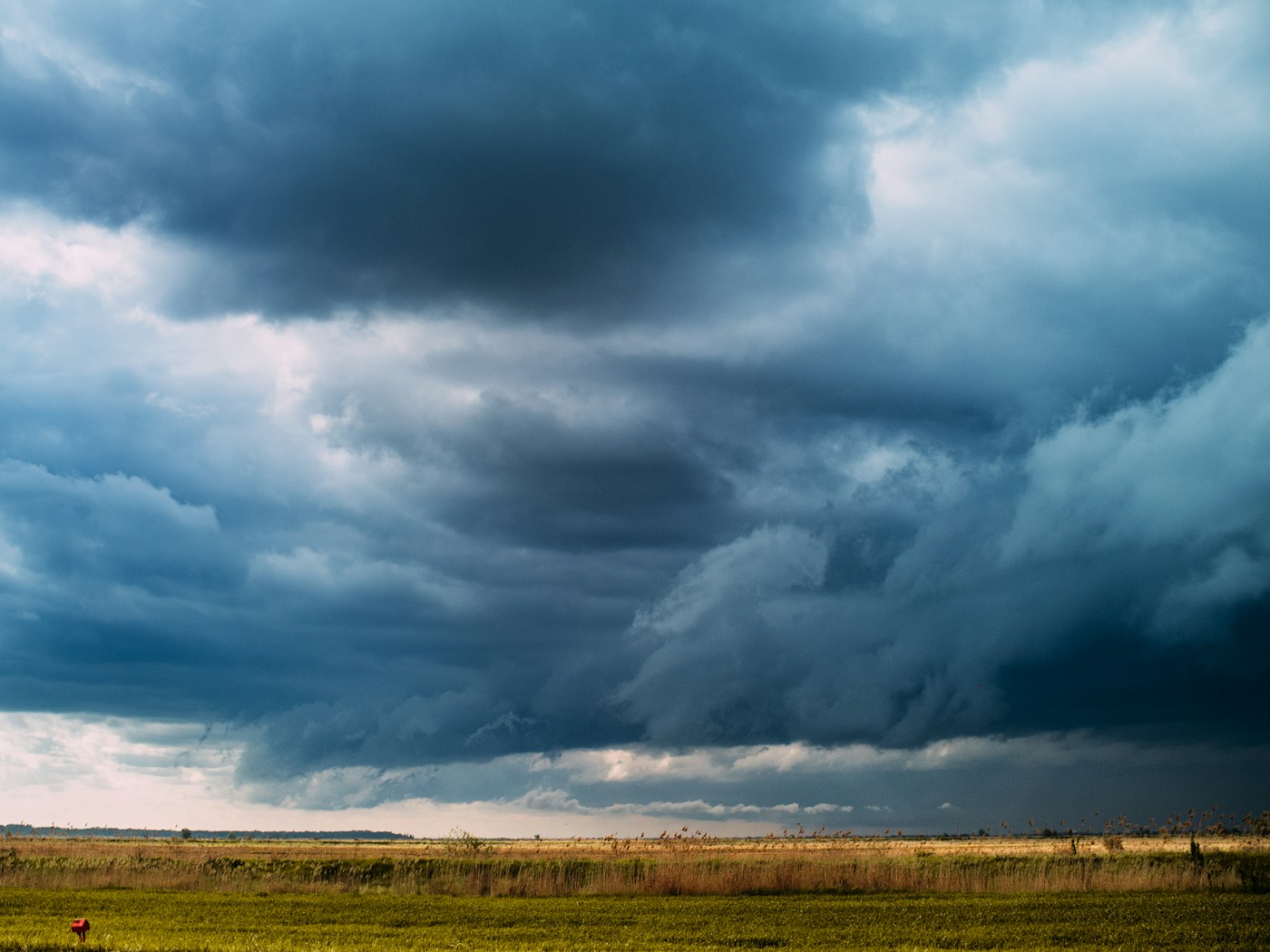
This is the season for skies. Thunderheads build over the desert through the afternoon and break in the early evening, and the light beneath them does things it cannot do in a cloudless sky. Photographers who have made several trips to Namibia often come back specifically for these months.
It is also the season of birth. Many antelope species time their calving to the arrival of the grass, and the plains fill with young animals. Migratory birds arrive in numbers, and the birding across the country is at its richest.
The trade is in wildlife concentration. Once water is available everywhere, animals no longer need the permanent waterholes, and they disperse across a landscape that has also grown thicker with vegetation. Sightings come less easily. They are still there, and a good guide finds them, but they must be found rather than simply waited for.
Days are hot in the interior, frequently above thirty-five degrees, and travel settles into a rhythm that works around the middle of the day rather than through it. The camps are quieter. The country feels less visited.
Where the coast keeps its own weather
Namibia’s Atlantic coast does not follow the seasons of the interior, and this surprises almost everyone.
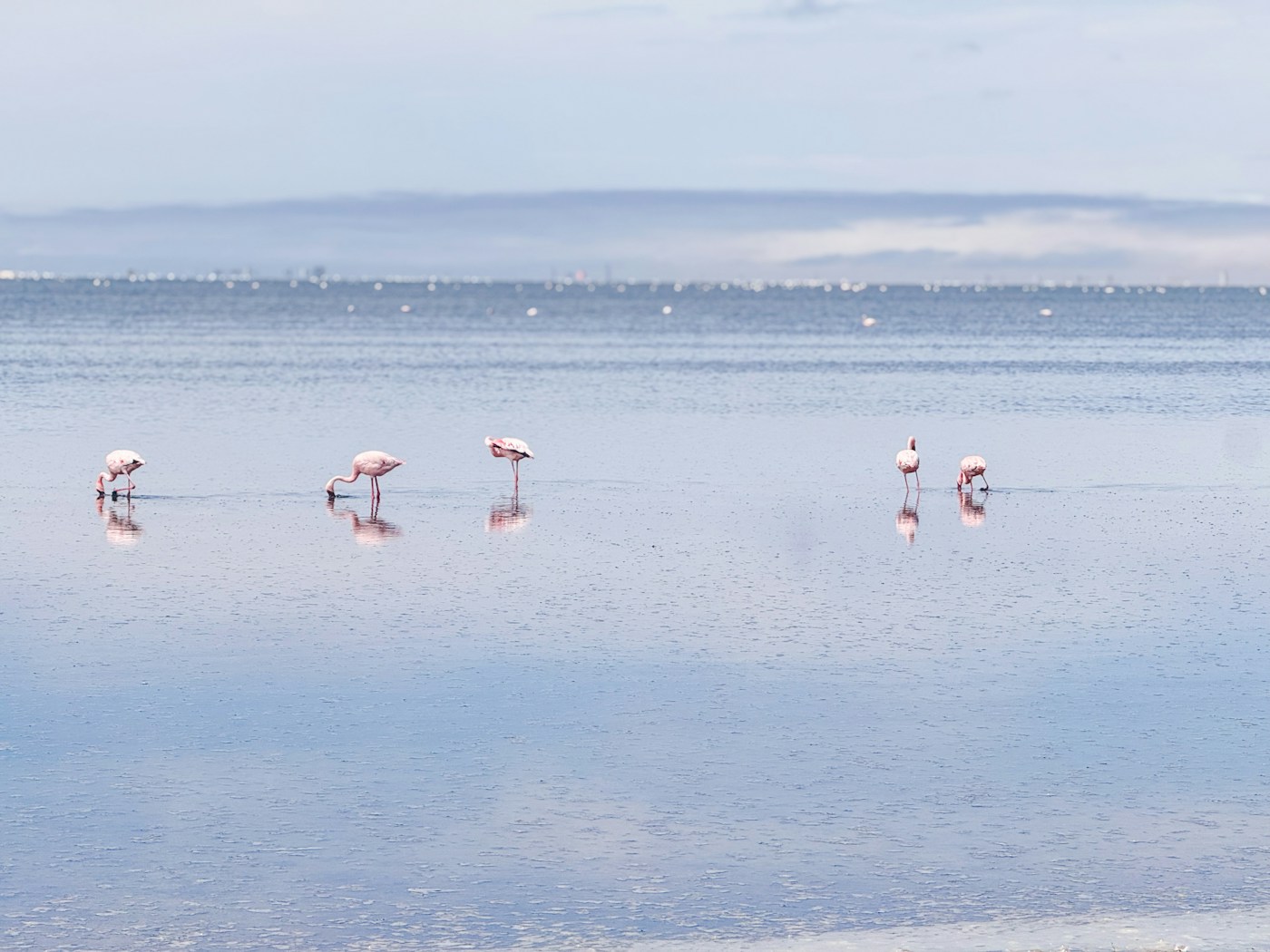
The Benguela current carries cold water north along this shoreline. Where that cold water meets warm desert air, fog forms, rolling inland overnight and lingering into the morning. It is this fog, rather than rain, that sustains much of the life along the coastal Namib. Beetles, lichens and succulents have adapted to draw water directly from it.
The practical effect is a temperature gap that has to be experienced to be believed. Swakopmund and Walvis Bay sit in the mid-teens under grey cloud while, three hours inland, the desert is in the mid-thirties and glaring. This holds through most of the year.
The drive across the dunes to Sandwich Harbour takes place inside this microclimate, and is better for the strangeness of it.
Choosing your season
For a first visit, with wildlife as the priority, the dry months from May to October give the most reliable sightings and the most open country. Within that window, September and October are the most concentrated.
For a return visit, or for a traveller drawn more to landscape than to game, the green months from November to April offer a Namibia that few people photograph: dramatic skies, young animals, migratory birds, and a country in colour.
For anyone who prefers cooler travel and does not mind cold nights, the winter months of June through August are the most comfortable time to be on the road, provided you have packed for the dark hours as well as the daylight.
The core route does not change with the season: Waterberg, Etosha, Twyfelfontein and Damaraland, Spitzkoppe, the Swakopmund coast, Sossusvlei, and two final nights on our family farm.
More on how the convoy works, what is included, and what to bring is in our FAQ and itinerary.
Common Questions
What is the best month to visit Namibia?
For wildlife, September and October, when the dry season is at its peak and animals concentrate around permanent waterholes. For landscapes, green scenery and dramatic skies, February and March. For the most comfortable daytime travel, June through August, though nights are cold.
Is Namibia good to visit in the rainy season?
Yes, for the right traveller. Between November and April the country turns green, migratory birds arrive, antelope calve, and the camps are quiet. Wildlife disperses because water is available everywhere, so sightings take more finding.
How hot does Namibia get?
Interior daytime temperatures regularly pass thirty-five degrees between November and March. Winter days sit in the low to mid twenties. Desert nights in June and July fall close to freezing.
Why is the Namibian coast so much colder than the interior?
The Benguela current carries cold water north along the Atlantic coast. Where it meets warm desert air, fog forms. Swakopmund and Walvis Bay can sit in the mid teens while the desert three hours inland is in the mid thirties.
This Might Also Interest You


MEET THE TEAM

Sophie

Jonah

Maya
© 2026 Herd Namibia · Windhoek, Namibia.
