Activities
Things to Do in Namibia: Ten Stops Worth Building a Trip Around
By the Herd Team, Windhoek
Written from the road. Herd is Namibian owned and operated, running guided 4x4 convoys out of Windhoek, with vehicles supplied by the family hire business our people have run in this country since 2003. Everything below comes from driving these routes ourselves.

Namibia is a country you cross rather than arrive in. The distances are long, the settlements are few, and a great deal of what makes the place remarkable sits somewhere between the named destinations rather than at them.
These are ten stops worth knowing on a Namibian road trip, running roughly north to south. Most sit on Herd’s 11-day route; Lake Otjikoto is a worthwhile detour for travellers continuing farther north.
1. The Waterberg Plateau
A long table of red sandstone lifting two hundred metres out of flat savanna, close enough to Windhoek to be the first proper stop and unlike anything around it.
The plateau top is effectively an island. Its isolation made it useful for reintroducing species that had disappeared from much of Namibia, and rhino, sable and roan antelope were brought back onto it. Most of the top is closed to vehicles, so the way to see it is on foot, climbing up through the sandstone on trails that end at the cliff edge with the whole savanna laid out below.
2. Lake Otjikoto
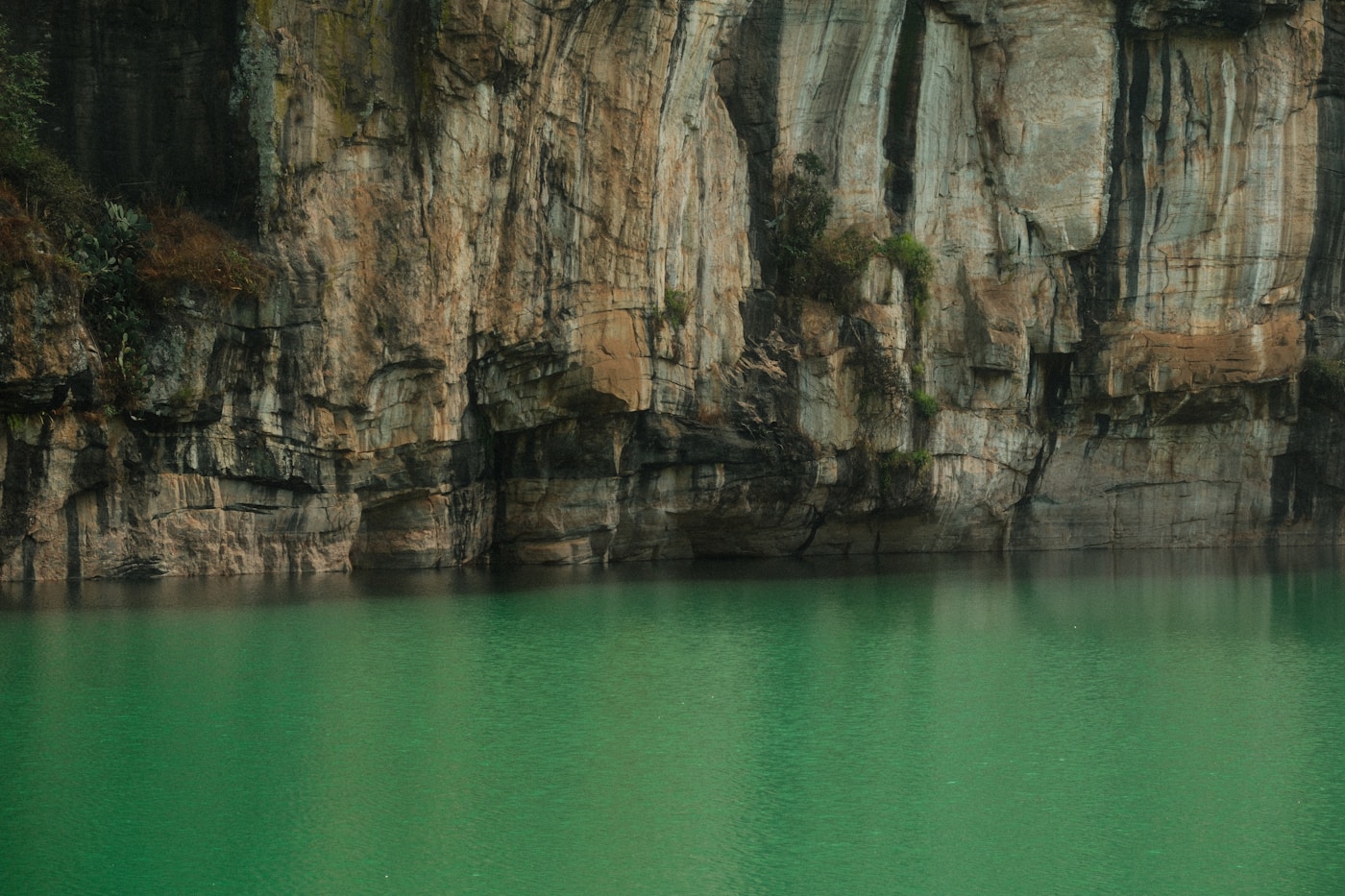
Namibia has two natural lakes. This is one of them, a near-perfect circle of deep green water where the roof of a dolomite cave collapsed.
It is also a war grave of sorts. Retreating German colonial forces dumped weapons, ammunition and field guns into it in 1915 rather than surrender them, and some of that material is still on the bottom. The water is deeper than its size suggests and holds fish found in very few other places. Twenty minutes off the road north, and worth them. Lake Otjikoto is not a stop on Herd’s current 11-day route.
3. A self-drive day in Etosha
The pan itself is the thing most people underestimate. Etosha is a salt flat of roughly four thousand eight hundred square kilometres, large enough to be seen clearly from orbit, and for most of the year it holds no water at all. Standing at its edge is like standing at the edge of a frozen sea.
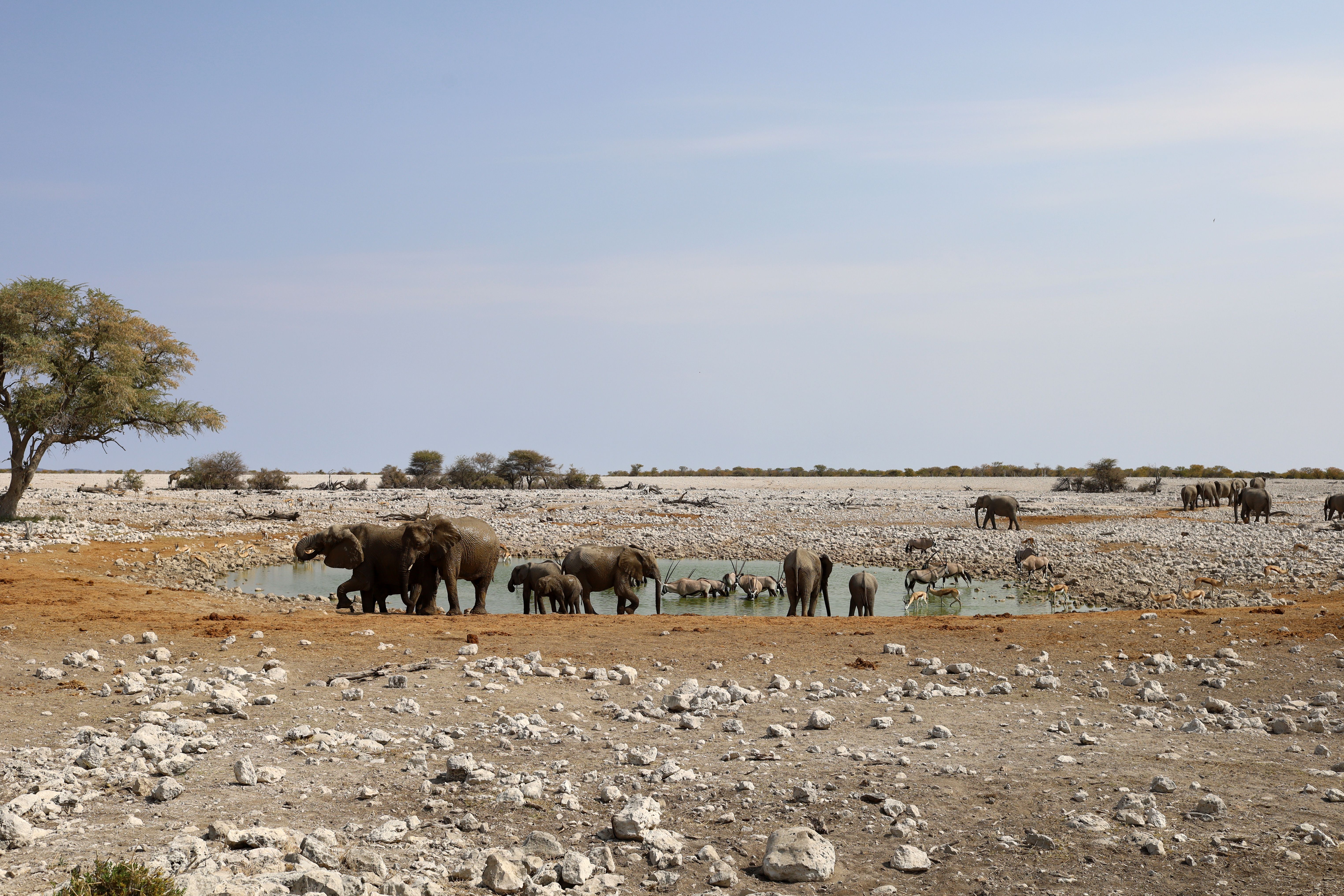
The wildlife gathers not on the pan but around the waterholes at its margins. The method is simple and it rewards patience: choose a waterhole, stop, turn off the engine, and stay. Animals come to water on their own schedule. A morning spent moving between waterholes produces less than an hour spent at one good one.
Elephant, giraffe, oryx, springbok, zebra and blue wildebeest are routine. Lion and cheetah are not guaranteed, which is the correct way for it to work.
4. The rock engravings at Spitzkoppe
Namibia’s first UNESCO World Heritage Site, and one of the largest concentrations of rock engravings in Africa.
There are more than two thousand of them cut into the sandstone here, some made several thousand years ago. Rhino, elephant, ostrich, giraffe, and the tracks of animals rendered from directly above, which suggests the panels functioned partly as teaching material for hunters learning to read spoor. It is a strange and quiet place to stand in, and a guide from the local community makes the difference between looking at marks on a rock and understanding what you are looking at.
5. Desert-adapted elephant in the Kunene
There are elephant in northwest Namibia that walk sixty kilometres between water sources across country that supports almost nothing.
They are not a separate species. They are ordinary African elephant that have learned to live in a place that should not hold them, with larger feet for sand, smaller herds, and a knowledge of the ephemeral riverbeds passed down through the matriarchs. Finding them is not certain on any given day. That uncertainty is exactly what makes the sighting land when it comes.
6. Spitzkoppe
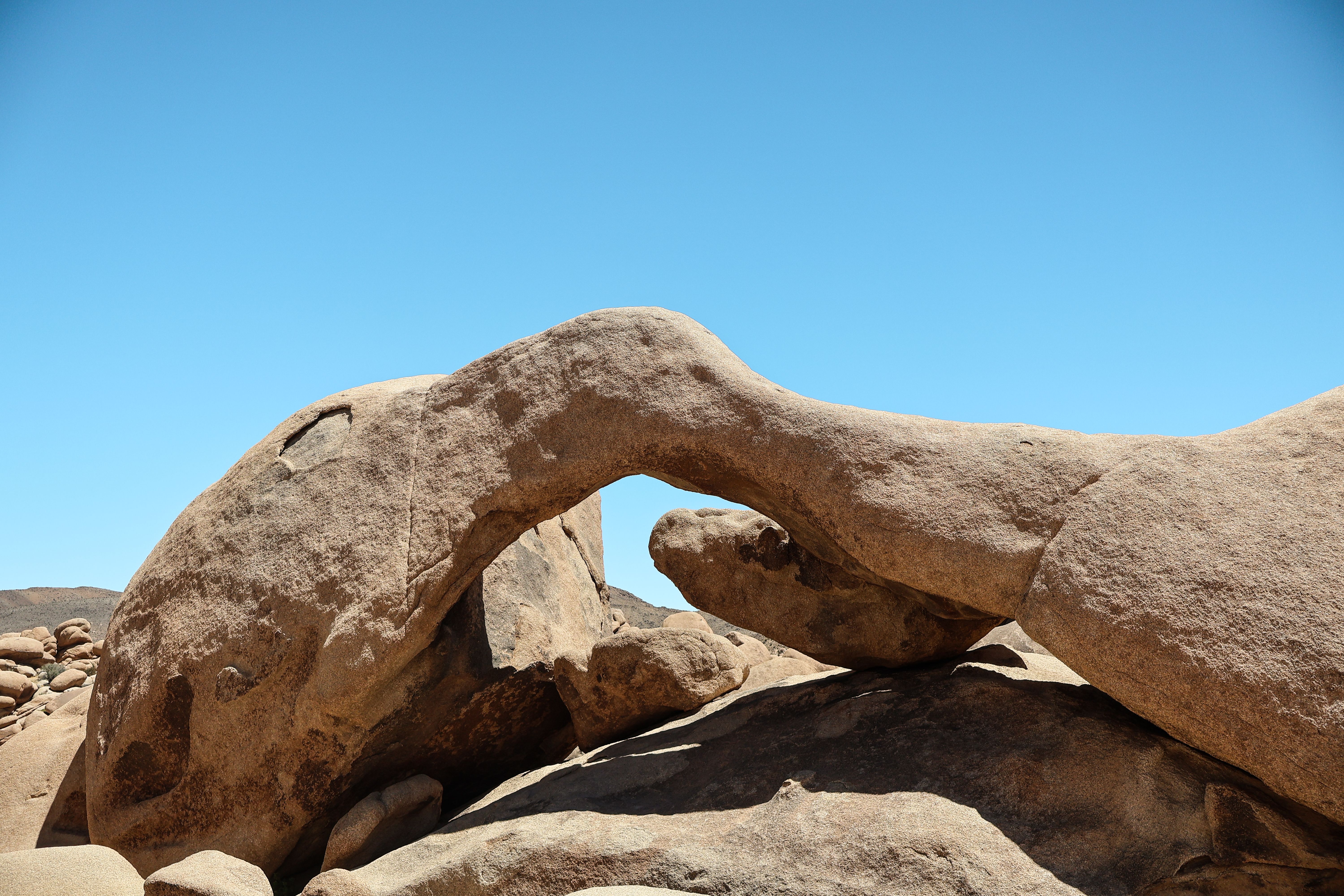
Seven hundred million years of granite standing alone on a gravel plain, and the most photographed rock formation in the country for good reason.
Walk out to the Arch in the late afternoon when the stone goes orange. Find the San paintings in the shelters at the base, which are among the oldest surviving human art anywhere and sit entirely unfenced, a short walk from where you sleep. Scramble as high as you are comfortable going. Then wait for dark, because there is no light anywhere near here and the sky does something people fly a long way to see.
7. The welwitschia on the road to the coast
Easy to drive past. Worth stopping for.
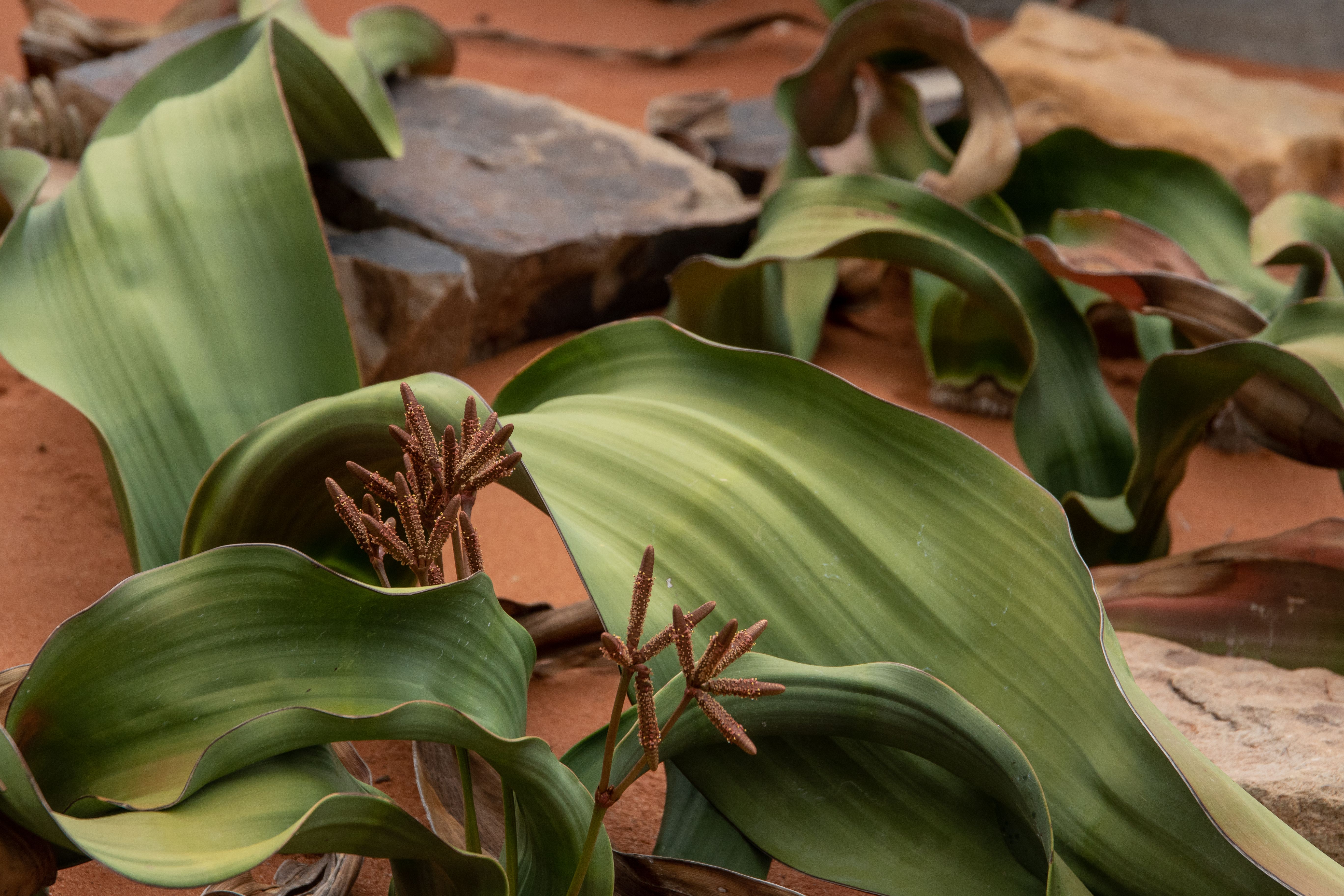
Welwitschia mirabilis grows only in the Namib and produces exactly two leaves in its entire life. The leaves never fall. They simply keep growing, splitting and fraying at the ends until the plant looks like a heap of torn straps lying on the gravel. Individual plants live well past a thousand years, and some in this region are considerably older than that.
Nearby, the Moon Landscape: the valley of the Swakop River eroded into ridges and gullies so bare that the comparison writes itself. Park, walk twenty metres from the vehicle, and listen to how quiet it is.
8. Tracking wildlife in Damaraland
The dry riverbeds of Damaraland hold elephants that have learned to live on almost nothing. You track them slowly, reading the ground for prints and dung, and when you find them they are usually doing very little, which is somehow the point. A herd at rest in a landscape that looks incapable of feeding anything is one of the strangest sights in Namibia. Go with someone who knows the herds.
9. Sandwich Harbour
The place where the Namib runs out of land.
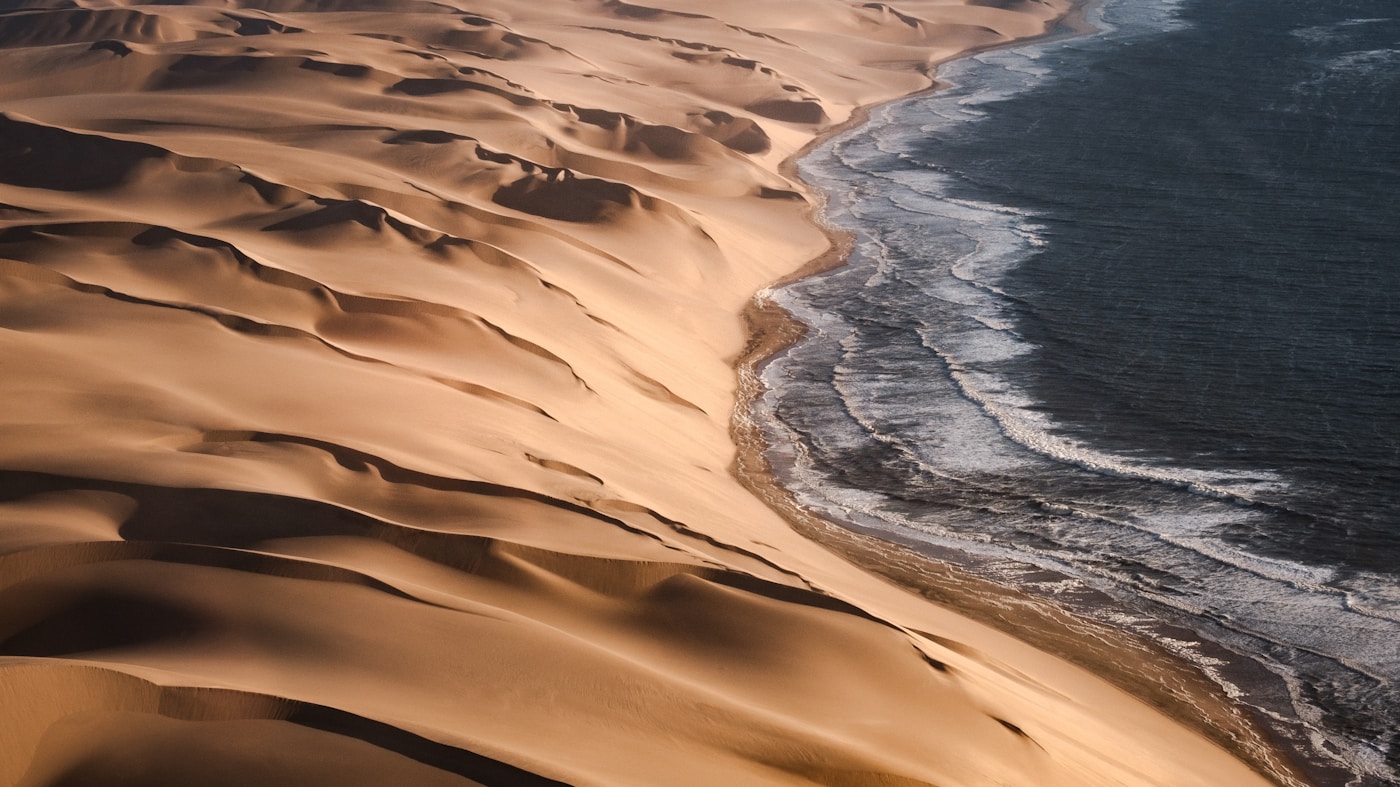
Dunes several hundred metres high come down directly into the Atlantic with no beach worth the name between them. Reaching it requires a 4x4, an experienced guide and attention to the tide, because the drivable strip along the shore disappears when the water comes in. From the top of the dunes the view splits cleanly in two: ocean on one side, desert on the other, and a hard line where they meet. On Herd departures, kayaking with seals is available as an optional add-on from the coast.
10. Sunrise at Sossusvlei and Deadvlei
The dunes are what most people come to Namibia for, and they earn it.
Go early. The gate to the reserve opens before sunrise for guests staying inside it, and the first hour is the entire point. The light moves across the sand and the dune faces separate into sharp bands of orange and shadow, and by nine o’clock the effect has flattened out and gone.
Deadvlei is a short walk from the parking area at the end: a white clay pan holding the skeletons of camelthorn trees that died roughly six hundred years ago when the dunes shifted and cut off the water. They have not rotted, because there is not enough moisture here to rot them. They simply stand where they died, black against white clay against orange sand.
Sesriem Canyon, a thirty-metre slot cut by the Tsauchab River, is worth the second half of the same day.

And on the way out
Solitaire, which is a petrol pump, a bakery and a field of rusting cars, and somehow one of the most photographed spots on the route.
The Spreetshoogte Pass, the steepest pass in Namibia, dropping off the escarpment with the whole plain opening out below it. Most people are driving back toward Windhoek by this point and thinking about home. Stop at the top anyway.
Most of these stops sit on or close to the route we run. The current itinerary shows the exact overnight route, while activities such as kayaking with seals and Sandwich Harbour are optional add-ons.
Common Questions
What is Namibia best known for?
The dunes at Sossusvlei and the dead camelthorn trees of Deadvlei, the wildlife around the waterholes of Etosha National Park, and the Skeleton Coast where the Namib Desert meets the Atlantic.
How many days do you need in Namibia?
Ten to fourteen days covers the classic northern loop at a reasonable pace, taking in Etosha, Damaraland, Spitzkoppe, the coast and Sossusvlei. Less than a week means choosing between the wildlife in the north and the dunes in the south.
Can you self-drive in Namibia?
Yes. Namibia is one of the most straightforward countries in Africa to drive, with quiet roads and clear signage. Most of the network is gravel, which calls for lower speeds, two spare tyres and no driving after dark.
What is the most beautiful place in Namibia?
Most travellers name Deadvlei at sunrise, where black tree skeletons stand on white clay against orange dune. Sandwich Harbour, where several hundred metres of dune drop straight into the Atlantic, runs a close second.
Is Etosha worth visiting?
Yes. The concentration of wildlife around its waterholes in the dry season is among the most reliable game viewing in southern Africa, and the floodlit waterholes at the park camps allow viewing well after dark.
This Might Also Interest You


MEET THE TEAM

Sophie

Jonah

Maya
© 2026 Herd Namibia · Windhoek, Namibia.
