Tips & Tricks
Is It Safe to Self-Drive Namibia Alone?
By the Herd Team, Windhoek
Written from the road. Herd is Namibian owned and operated, running guided 4x4 convoys out of Windhoek, with vehicles supplied by the family hire business our people have run in this country since 2003. Everything below comes from driving these routes ourselves.

Short answer: yes. Namibia is one of the safest countries in Africa to travel independently, and thousands of people self-drive it alone every year without incident.
But that answer is close to useless on its own, because it addresses the wrong risk. Almost everyone who searches this question is quietly worried about crime, and crime is not what hurts people in Namibia.
What hurts people is gravel, distance, and driving after dark. Those are the three, and none of them are things you can solve with courage. They are solved with information, which is what the rest of this is.
What actually goes wrong
There is a document that tells you the truth about Namibian roads more honestly than any travel guide, and it is the insurance paperwork.
Look at what a Namibian 4x4 rental waiver excludes. Not what it covers, what it refuses to cover. Our family’s hire company has been writing these terms since 2003, and the exclusions are consistent across the industry:
Insurers exclude what happens most often and costs most to fix. That list is a precise description of the actual risk profile of this country. Nobody is excluding muggings. They are excluding a vehicle leaving the road on its own.
Single-vehicle accidents. No third party involved. You, the road, and nothing else.
Rollovers. Excluded at the standard level everywhere, and only covered at the top tier if at all.
Driving into a stationary object or an animal.
Any incident occurring before sunrise or after sunset.
Recovery costs, regardless of fault.
Risk one: gravel behaves differently than you expect
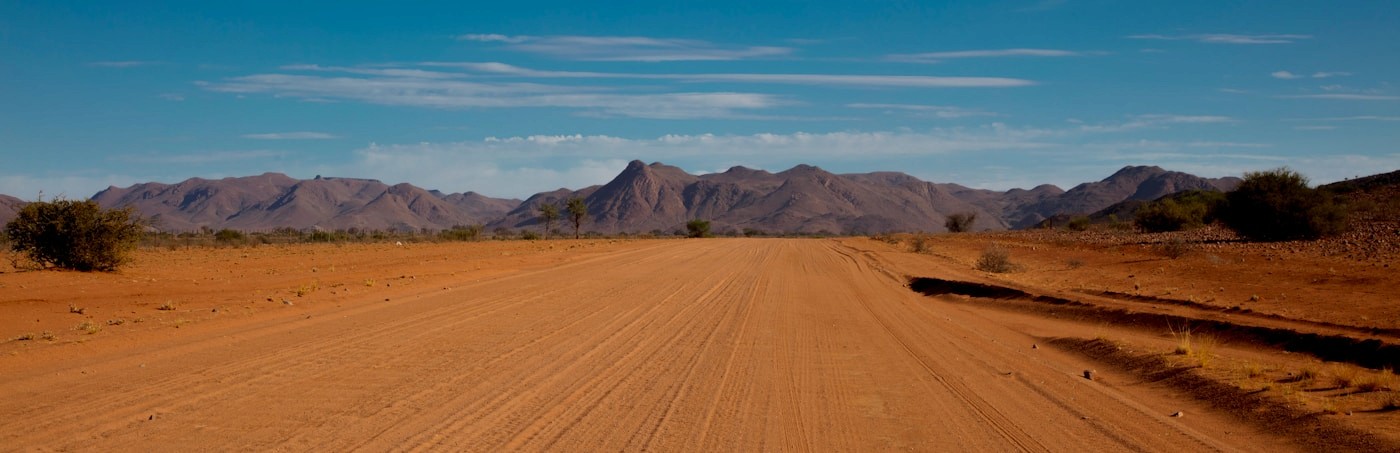
Most of Namibia’s road network is gravel, and it is good gravel by regional standards. Wide, graded, well signed. That is exactly what makes it dangerous.
A well-maintained gravel road invites you to drive it like tar. It is not tar. The surface moves. Loose stone sits on a hard base, corrugation builds up in waves, and the difference between grip and no grip arrives without warning, usually mid-corner or during a correction.
The failure sequence is almost always the same. Speed slightly too high. A small correction. The back steps out. An instinctive over-correction. The vehicle, which is a high-clearance 4x4 with a heavy roof load and a raised centre of gravity, does not slide. It trips and rolls.
What reduces it:
Eighty kilometres per hour is the working maximum on gravel. Not the legal limit, the sensible one. Most experienced drivers here sit lower.
Drop your tyre pressure for gravel and put it back up for tar. Your rental company should tell you the numbers for that specific vehicle. If they do not, ask.
No sudden inputs. Steering, braking and acceleration all need to be slower than feels natural.
If the back steps out, steer into it and come off everything. Do not brake. This is worth rehearsing mentally before you need it.
Assume every blind rise has something behind it. Livestock, a stopped vehicle, a washaway.

Risk two: distance from help
This is the one that changes the character of everything else. A minor problem in a populated country is a serious problem here.
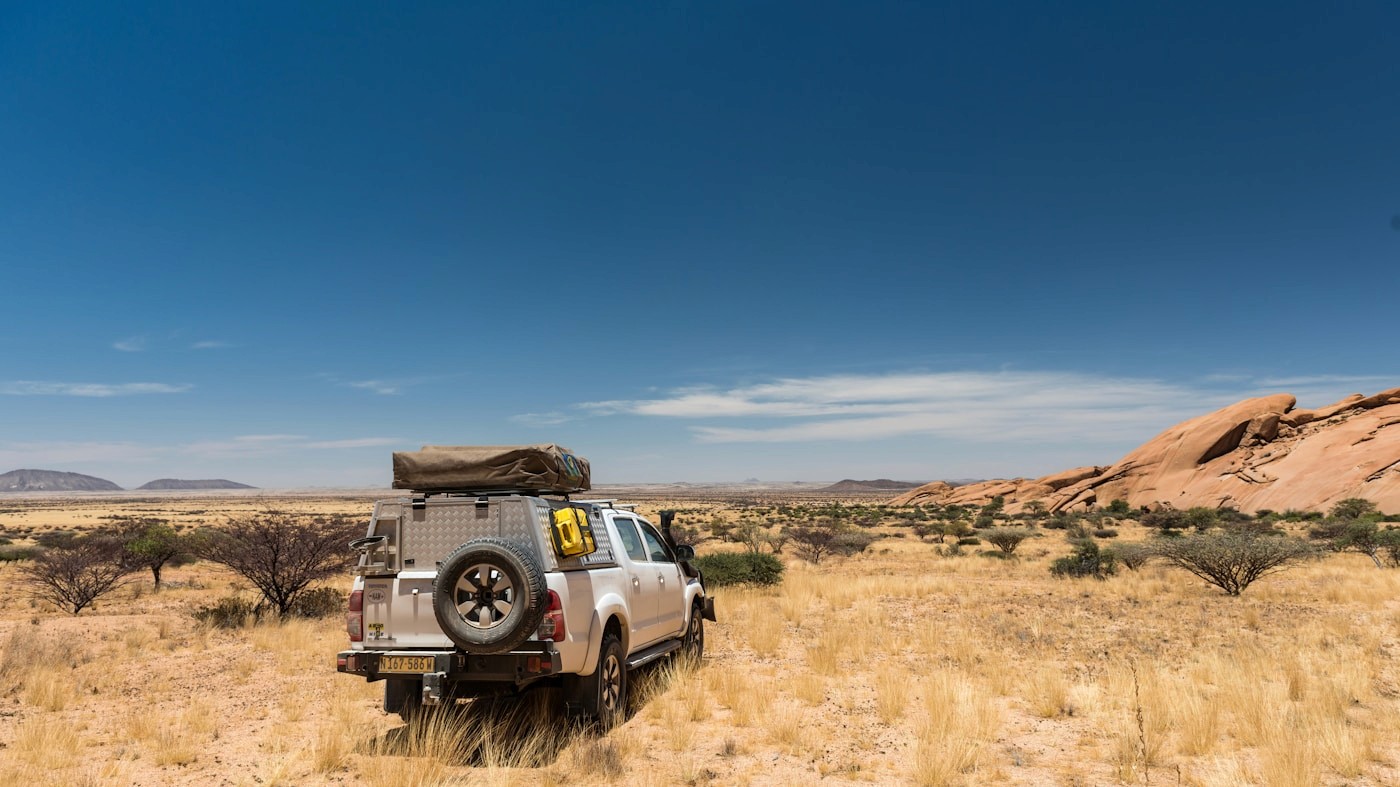
Namibia has one of the lowest population densities on Earth. On sections of the route between Damaraland and the coast, or east from Sesriem, you can drive for hours without passing a vehicle. Mobile coverage disappears entirely for long stretches. The nearest clinic to a campsite in Kunene is measured in hours, not minutes, and the nearest hospital capable of dealing with something serious is likely Windhoek.
A puncture is an inconvenience with company and a genuine problem alone at 3pm in February. A broken ankle at a remote campsite is a logistics operation.
What reduces it:
Two spare tyres, not one. This is standard advice here for a reason. Punctures are common enough that a single spare leaves you one puncture from being stranded.
A satellite communicator. A Garmin inReach or equivalent. Cheap to rent, and the only thing that works where there is no signal.
Tell someone your route every day. Specific, not vague. Which campsite, which road, expected arrival.
Carry more water than you think. Twenty litres in the vehicle, always, separate from what you are drinking.
Travel insurance with medical evacuation cover. Not optional in a country this size.
Risk three: driving after dark
Every rental company in Namibia tells you not to drive at night. Every insurance policy excludes it. There is a reason the entire industry agrees on this one thing.
Namibian wildlife moves at dusk and after dark, and much of it moves onto roads. Kudu are the specific problem. They are large, they are common, they are the colour of the roadside, and when startled they jump rather than run, frequently into the windscreen rather than away from it. A kudu strike at speed is a serious accident.
Add unfenced livestock, unlit vehicles, and the fact that gravel hazards are effectively invisible in headlights, and night driving concentrates most of the country’s risk into a few hours.
What reduces it:
Plan every day to arrive before sunset. Not at sunset. Before it.
Build in a two-hour buffer. Namibian distances take longer than the map suggests, and gravel is slower than you plan for.
If you are running late, stop. Finding somewhere to stay is a smaller problem than the alternative.
What about crime
This is the fear most people arrive with, and it is largely misplaced.
Namibia is politically stable, tourism is well established, and violent crime against travellers is uncommon. Windhoek has opportunistic theft like any capital city, and the usual precautions apply: do not leave valuables visible in a parked vehicle, be aware at night in the city, use secure parking.
Outside the towns, the practical reality is that there is often nobody around at all. The campsites on the standard tourist routes are well run and used to international visitors. Most travellers report feeling less watched and less hassled here than in most European cities.
The honest summary: you are far more likely to be hurt by a road than by a person in Namibia.
Solo female travel specifically
Namibia consistently ranks among the more comfortable African countries for women travelling alone, and the reasons are structural rather than cultural platitudes.
Self-drive tourism has been normal here for decades, so a woman alone in a 4x4 is unremarkable rather than notable. Interactions tend to be practical and polite. Campsites are established, staffed, and used to solo travellers.
The considerations that genuinely matter are the same ones that matter for anyone, with a couple of additions: campsite ablution blocks can involve a walk in the dark, which is worth checking before booking a site, and a satellite communicator matters more when travelling alone than it does in a pair.
Our family’s hire business has been renting to solo female travellers for over twenty years. The recurring feedback is not that they felt unsafe. It is that they felt more capable than they expected.
The question underneath the question
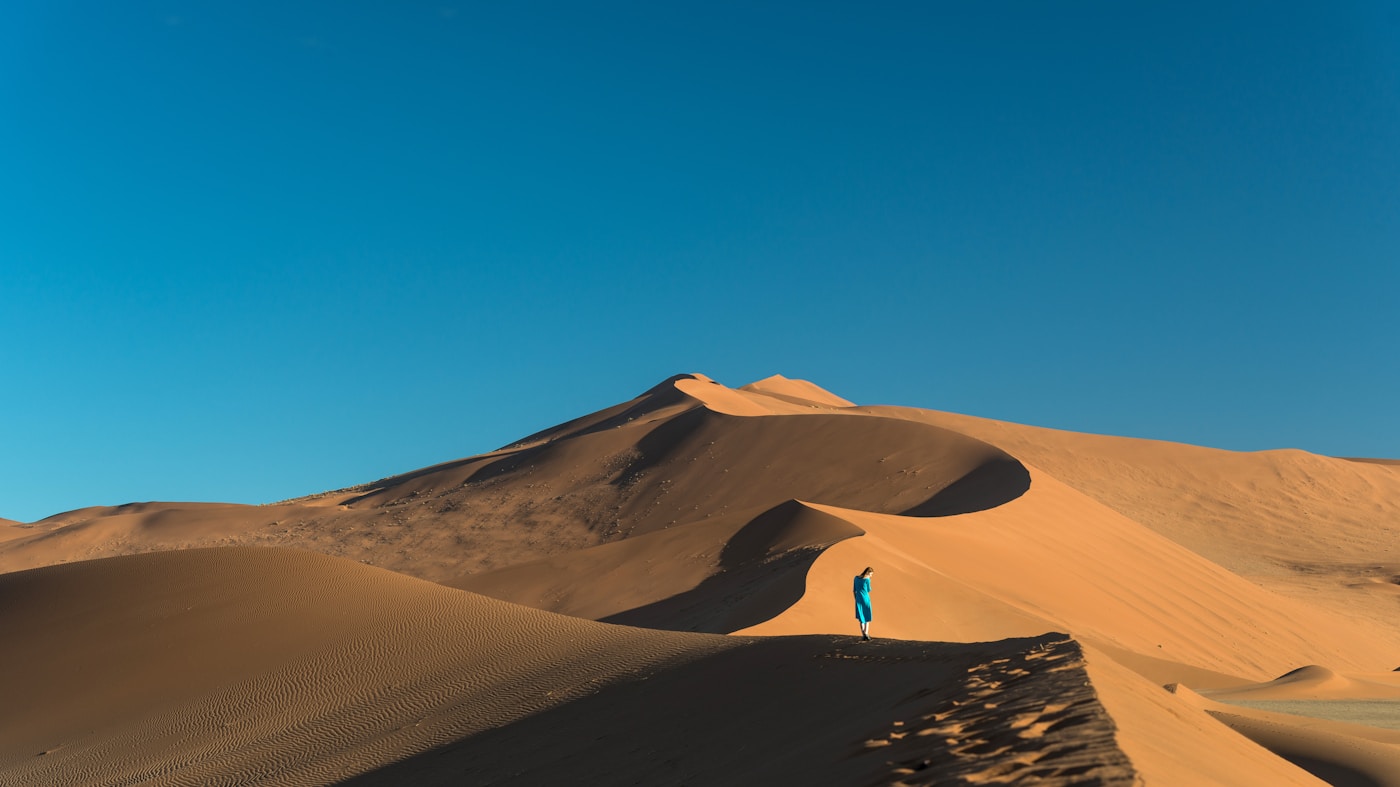
Most people searching whether Namibia is safe to drive alone are not really asking about risk. They have usually already decided the risk is manageable. What they are actually asking is whether they want to do it alone.
Those are separate questions and they deserve separate answers.
Namibia is genuinely excellent for solo travel. Our own hire company writes about this at length, and the argument is a good one: the country is spacious, quiet and unhurried, and a lot of people discover something about their own capability out here. If that is what you came for, go and do it. Prepare properly, drive slowly, do not drive at night, and you will almost certainly be fine.
But some people are not hesitating because of danger. They are hesitating because eleven days of driving alone through empty country, eating alone, and camping alone is a different trip than the one they were imagining. That is not a safety concern. That is a preference, and it is a completely legitimate one.
If that is closer to your position, the answer is not more preparation. It is different company.
What a convoy actually changes
This is what Herd does, so treat this section as what it is, but the mechanics are worth understanding regardless of who you travel with.
Every risk above is a function of being alone with a problem.
A puncture with a support vehicle and a guide is a twenty minute stop with cold drinks. A puncture alone at 3pm on a hot afternoon is a different afternoon. A mechanical fault two hundred kilometres from anywhere is a serious situation alone, and a manageable problem when there are four other convoy vehicles and someone who knows the nearest workshop by name.
Nobody drives out of radio contact. Nobody drives after dark, because the day is planned to make that unnecessary. The gravel briefing happens before anyone leaves Windhoek rather than being learned by accident.
And the part that is harder to quantify: you are not the only person responsible for noticing that something has gone wrong.
None of that makes solo travel here a bad idea. It makes it a different trip with a different risk profile, and knowing which one you actually want is the more useful question than whether Namibia is safe.
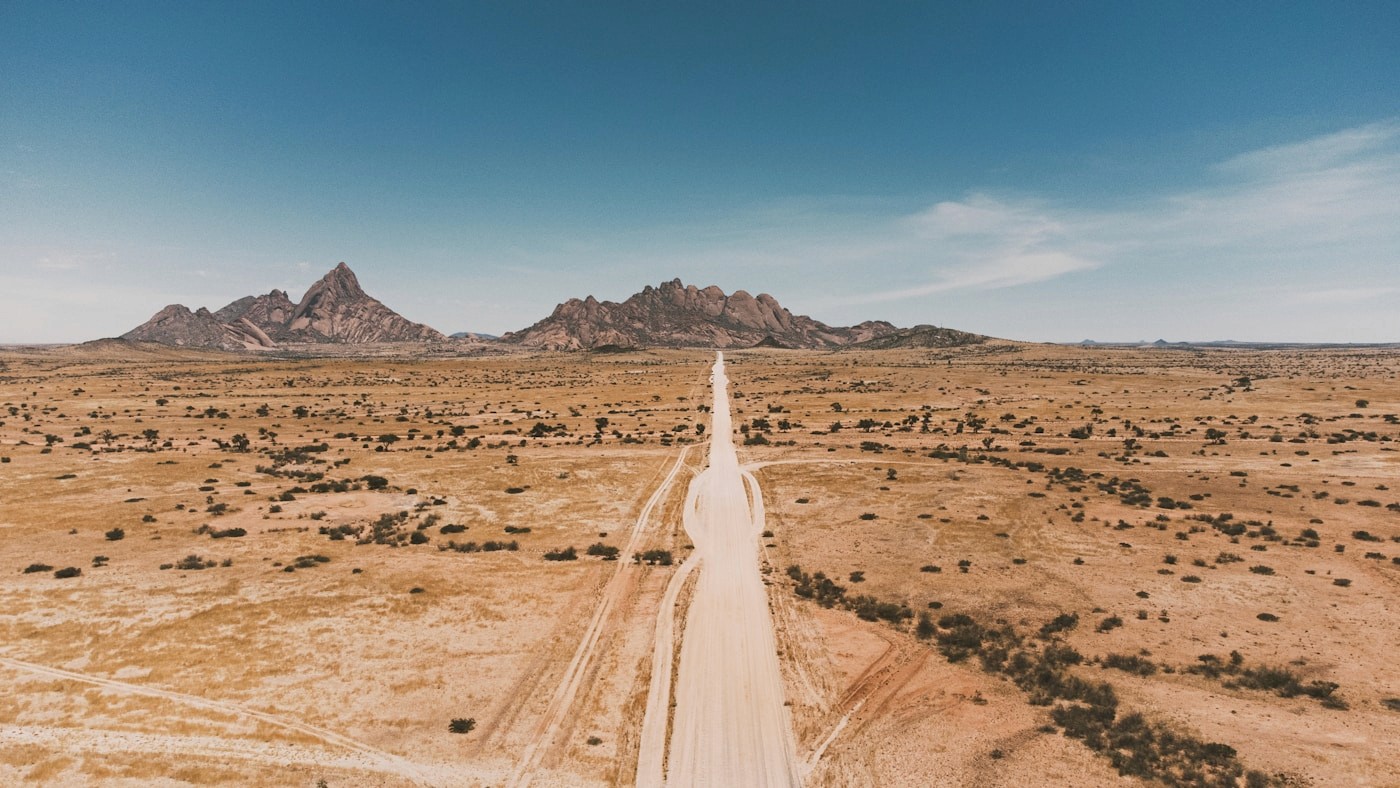
Herd is built for solo travellers without making anyone drive alone. Sixteen guests share four automatic 4x4s, and driving is optional. The guide vehicle leads the route, while radios keep the convoy together.
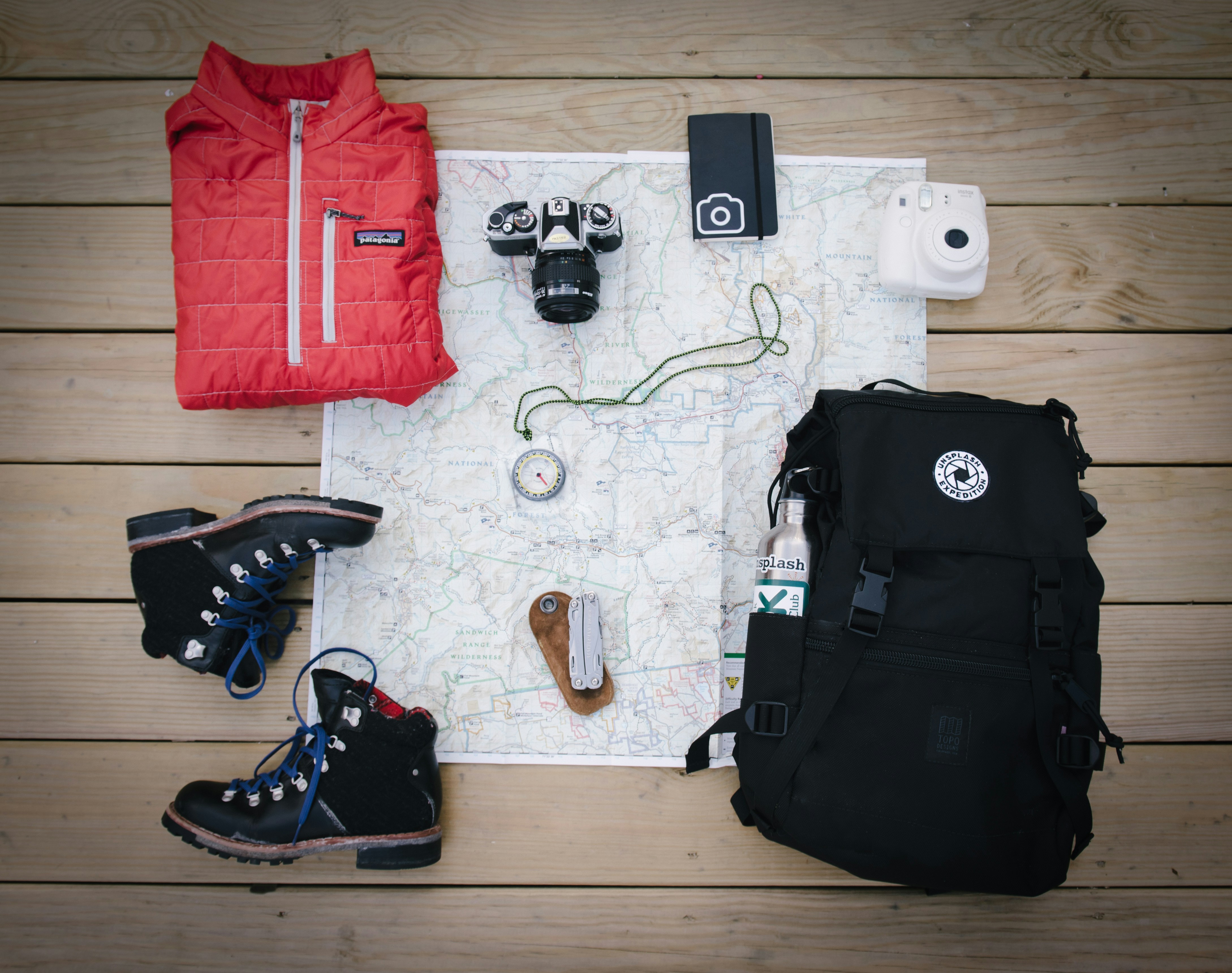
More on what to bring is in our packing list, and the pre-departure guide covers documents, licences and insurance. If you would rather not do the roads alone, the full itinerary is here.
Common Questions
Is Namibia safe for tourists?
Yes. Namibia is politically stable with well-established tourism infrastructure and low rates of violent crime against visitors. The genuine risks are road conditions, long distances between towns, and driving after dark, rather than crime.
Is it safe to drive alone in Namibia?
Yes, with preparation. Keep gravel speeds at or below 80 km/h, carry two spare tyres and plenty of water, never drive between sunset and sunrise, and carry a satellite communicator for areas without mobile coverage.
What is the biggest danger in Namibia?
Gravel road accidents, specifically single-vehicle rollovers caused by driving too fast for the surface or over-correcting after a slide. This is reflected in Namibian rental insurance, which typically excludes single-vehicle accidents and rollovers at standard cover levels.
Do I need a 4x4 to drive in Namibia?
Not for every road, but a high-clearance 4x4 is strongly recommended for the main tourist routes, which are largely gravel. It also allows access to campsites and areas that a standard car cannot reach.
Is Namibia safe for solo female travellers?
Generally yes. Self-drive tourism is long established and a woman travelling alone is unremarkable here. Standard precautions apply in Windhoek at night, and a satellite communicator is worth carrying when travelling alone anywhere remote.
Can you drive at night in Namibia?
It is strongly discouraged and excluded by most rental insurance policies. Wildlife, particularly kudu, moves onto roads at dusk and after dark, and gravel hazards are effectively invisible in headlights. Plan to arrive at every destination before sunset.
How far apart are towns in Namibia?
Far. Sections of the main tourist route run for several hours without a fuel stop or mobile coverage. Refuel whenever you pass a station rather than when you need to, and carry at least twenty litres of water in the vehicle.
This Might Also Interest You


MEET THE TEAM

Sophie

Jonah

Maya
© 2026 Herd Namibia · Windhoek, Namibia.
